Keynote speakers
George Z. Voyiadjis
Louisiana State University
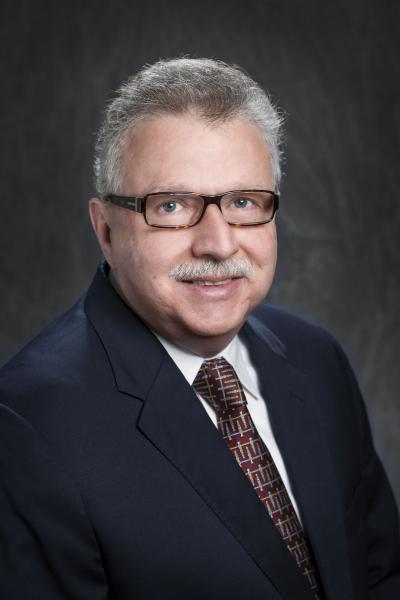
Professor George Z. Voyiadjis is a Boyd Professor in the Department of Civil and Environmental Engineering at Louisiana State University, where he has been a faculty member since 1980. The title of Boyd Professor is the highest professorial rank awarded within the Louisiana State University System.
His research focuses on mechanics of materials, plasticity, and damage mechanics of metals, metal matrix composites, polymers, and ceramics, with particular emphasis on theoretical modeling, numerical simulations, and experimental correlation. He specializes in computational solid mechanics and computational materials science.
He is a recognized authority in multiscale materials modeling, strain localization, gradient plasticity theory, and macro- and micromechanical characterization of damage. Among his honors is the ASCE Theodore von Karman Medal, awarded for outstanding contributions to solid mechanics, multiscale modeling, and research on damage and plasticity of materials.
His scholarly output includes numerous publications and monographs in the fields of damage mechanics, composite mechanics, materials modeling, and computational mechanics of materials. According to his Google Scholar profile, his works have been cited more than 21,000 times.
Outline of the presentation:
available soon
Marian Wiercigroch
University of Aberdeen (United Kingdom)
Professor Marian Wiercigroch is a world-renowned expert in nonlinear dynamics and mechanical vibrations. He holds the prestigious Sixth Century Chair in Applied Dynamics at the University of Aberdeen, United Kingdom, where he leads the Centre for Applied Dynamics Research. Over the course of his career, he has established a strong international research school in nonlinear dynamics and its engineering applications.
He graduated from the Silesian University of Technology, where he obtained his PhD with distinction, and later pursued his academic career in the United Kingdom, earning the higher doctorate degree of Doctor of Science. Throughout his career, he has held a number of senior academic and leadership positions, including Director of the Centre for Applied Dynamics Research and Head of Engineering.
Professor Wiercigroch’s research focuses on nonlinear dynamics, vibrations, and chaotic phenomena, as well as their applications in modern engineering systems. His work spans a wide range of topics, including cutting processes, drilling dynamics, fluid–structure interactions, and energy harvesting. He has authored hundreds of scientific publications and holds several patents, with his research contributing significantly to technological advances, including innovative solutions in resonance-based drilling.
He is a Fellow of prestigious scientific institutions, including the Royal Society of Edinburgh and the Royal Academy of Engineering. His achievements have been recognized with numerous awards and honors, such as a Fulbright Fellowship and an honorary doctorate from Lodz University of Technology.
As a leader of international research projects and organizer of numerous scientific conferences, Professor Wiercigroch активно fosters collaboration between academia and industry. His work continues to have a significant impact on modern engineering and the effective transfer of knowledge into industrial practice.
Outline of the presentation:
available soon
David Taylor
Trinity College Dublin
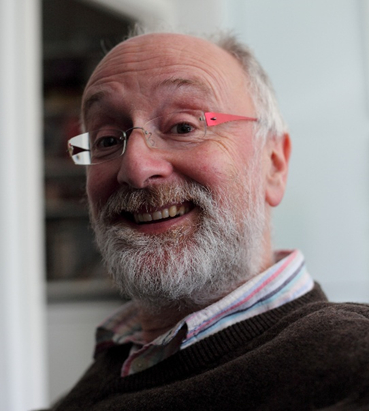
David Taylor was born in the UK and educated at Cambridge University before moving to Ireland where he has spent the rest of his career working at Trinity College Dublin, the University of Dublin. He is currently an Emeritus Professor at the Trinity Centre for Biomedical Engineering, Department of Mechanical, Manufacturing and Biomedical Engineering.
He was honoured with Membership of the Royal Irish Academy (the Irish equivalent of the UK’s Fellow of the Royal Society) in 2009. He also holds fellowships of the Institution of Engineers of Ireland and the Royal Academy of Medicine in Ireland.
His interests lie in the strength and fracture of materials and structures, including fracture mechanics theory and practice and the behaviour of medical and biological materials. He has published over 250 journal articles and four books. Significant achievements include The Theory of Critical Distances, an approach now widely adopted for predicting the effects of stress concentrations on fatigue and fracture, and contributions to understanding how living materials such as bone are able to detect and repair damage. Roles include Editor-in-Chief of the Journal of the Mechanical Behavior of Biomedical Materials and Director of the Association of Consulting Forensic Engineers.
Outline of the presentation:
available soon
Martin Ostoja-Starzewski
Cracow University of Technology (Poland), University of Illinois Urbana-Champaign (USA)
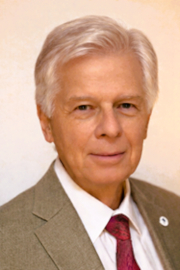
Martin Ostoja-Starzewski studied at Cracow University of Technology (1972-1977), followed by a Master’s (1980) and a Ph.D. (1983) at McGill University, all in mechanical engineering. He currently serves as a Professor at the Cracow University of Technology and as a Research Professor and Richard W. Kritzer Faculty Scholar at the University of Illinois Urbana-Champaign.
His research focuses primarily on stochastic mechanics, random and fractal media, continuum theories, and applied physics. He (co-)authored 260+ journal papers and four books:
1. Microstructural Randomness and Scaling in Mechanics of Materials, CRC Press (2007);
2. Thermoelasticity with Finite Wave Speeds, Oxford University Press (2009);
3. Tensor-Valued Random Fields for Continuum Physics, Cambridge University Press (2019);
4. Random Fields of Piezoelectricity and Piezomagnetism, Springer (2020).
He serves as Editor-in-Chief of the Journal of Thermal Stresses and has also served as an editor or editorial board member of numerous other journals (including Computer Methods in Applied Mechanics and Engineering, Acta Mechanica). His distinctions include the Timoshenko Distinguished Visitor at Stanford University, Worcester Reed Warner Medal of ASME, Rothschild Distinguished Visiting Fellow at Isaac Newton Institute (University of Cambridge), Fellow of ASME, American Academy of Mechanics, Society of Engineering Science, Associate Fellow of AIAA, and memberships in the European Academy of Sciences and Arts and in Academia Europaea.
Outline of the presentation:
available soon
Dieter Weichert
RWTH-Aachen University
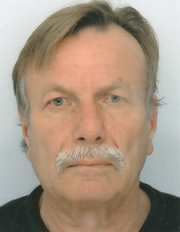
Born 1948, Studies of Mechanical Engineering, Diploma (RWTH-Aachen) 1973. Dr.-degree 1980 and Habilitation 1986 (Ruhr-University Bochum); retired 2013.
Professional positions: Krupp-Brüninghaus GmbH, Werdohl (CAD/CAM, Organisaton and Data management (Head)), Institut des Sciences Appliquées de Rouen (General Director).
Academic positions: American University of Beirut (assoc. Prof.), Université des Sciences et Technologies de Lille (full Prof), Institute of General Mechanics, RWTH-Aachen University (full Prof, Head).
Honorary positions: Advisory professor Jiaotong University, Beijing, Nanjing University of Science and Technology.
Distinctions: Palmes Académiques (France) – Chevalier
Doctor honoris causa, University of Dnepropetrovsk, UA
Advising activities: Industrial research and advise (Belgium), Governance of universities (France), Advisory board Railway Vehicle Operation Engng. Beijing Jiaotong University.
Scientific activities: Solid Mechanics, Inelastic material behavior, Failure of Materials and Structures, Composites, Biomechanics. Author, co-author, editor, co-editor of more than 300 papers and 10 books. Supervised more than 30 PhD-theses.
Outline of the presentation:
available soon
Tomasz Sadowski
Lublin University of Technology (Poland)
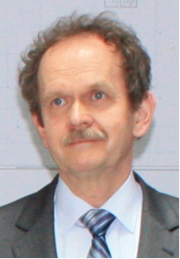
Prof. Tomasz Sadowski obtained his PhD and habilitation at the Institute of Fundamental Technological Research of the Polish Academy of Sciences. In 2005, he was awarded a Marie Skłodowska-Curie Individual Fellowship under the EU’s 5th Framework Programme.
He has worked as a visiting professor at the University of Illinois at Chicago (USA), the Technical University of Munich (Germany), the Technical University of Darmstadt (Germany), Martin Luther University Halle-Saale (Germany), Swansea University (UK) and others.
He has coordinated four European projects under the 5th, 6th and 7th Framework Programmes. In 2016, he was awarded an honorary doctorate by Ovidius University (Constanta, Romania).
His current research interests include: continuum mechanics of damage and fracture in brittle and ductile materials and engineering structures. In particular, he focuses on: (1) modelling of ceramic, polymer, porous and foam composites, functionally graded composites subjected to mechanical loads and thermal shocks; (2) the deformation of damaged plates and sandwich structures; (3) experimental investigations of materials and structures subjected to static, cyclic thermal and impact loads.
Prof. T. Sadowski has published 301 papers (Scopus, h-index: 55). He has co-organised 34 international scientific conferences, at which he delivered 18 plenary and keynote lectures. He has coordinated and participated in several national projects funded by the National Science Centre (NCN) and the National Centre for Research and Development (NCBiR).
Outline of the presentation:
available soon
Stanisław Stupkiewicz
Institute of Fundamental Technological Research Polish Academy of Science
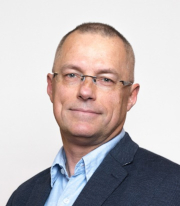
Stanisław Stupkiewicz is a professor at the Institute of Fundamental Technological Research (IPPT), Polish Academy of Science in Warsaw, Poland and head of the Department of Mechanics of Materials. He graduated from the Warsaw University of Technology (1989) and received his PhD (1996) and habilitation (2006) at IPPT. Since 2011 he is a full professor. In 2013-2014, he spent one year in Italy as a visiting professor at the University of Trento.
His research interests include micromechanics of interfaces and interface layers, size effects, multiscale modelling of shape memory alloys, phase-field modelling of microstructure evolution, constitutive modelling of contact phenomena, contact mechanics, plasticity, crystal plasticity, and computational mechanics.
Since 2020 he is a corresponding member of the Polish Academy of Science. He is an Editor of Mechanics of Materials, Section Editor of Archives of Mechanics, and member of the editorial boards of Computational Mechanics and Archive of Applied Mechanics.
Outline of the presentation: